Best Nose Hair Trimmer: How to Choose the Right One (And Stop Guessing)

Most buyers approach this purchase with the wrong question. They search “best nose hair trimmer,” scan a list of options ranked by star rating, and pick the one with the most reviews. The problem: star ratings on online marketplace aggregate every buyer — including people who returned the product, people who left 5 stars without using it, and people with completely different use cases than yours.
The right question isn’t “which trimmer has the best reviews.” It’s: what does this tool actually need to do for me, and which specs determine whether it does that well?
This guide answers that. It covers the four decisions that matter, the specs that correspond to each, and which type of trimmer makes sense depending on who you are and how you actually use it.
The Four Decisions That Actually Matter
There is no single “best” nose hair trimmer. There is a best nose hair trimmer for your specific combination of four variables:
1. Blade type — Rotary or foil. This determines whether the trimmer pulls hair or cuts it cleanly.
2. Waterproofing — IPX7 or splash-resistant. This determines how you clean it and whether shower use is possible.
3. Power source — USB-C, standard USB, or battery-powered. This determines travel convenience and how often you think about charging.
4. Use case — Single function (nose only) or multi-head (nose, ear, eyebrow, body). This determines whether you’re buying one tool or consolidating several.
Every other specification — color, grip texture, included accessories — is secondary to these four. Get these four right and you’ll have a trimmer that works. Get them wrong and you’ll replace it within a year.
Decision 1: Blade Type — Rotary vs. Foil
This is the most important specification for comfort. Most nose hair trimmers use one of two cutting mechanisms:
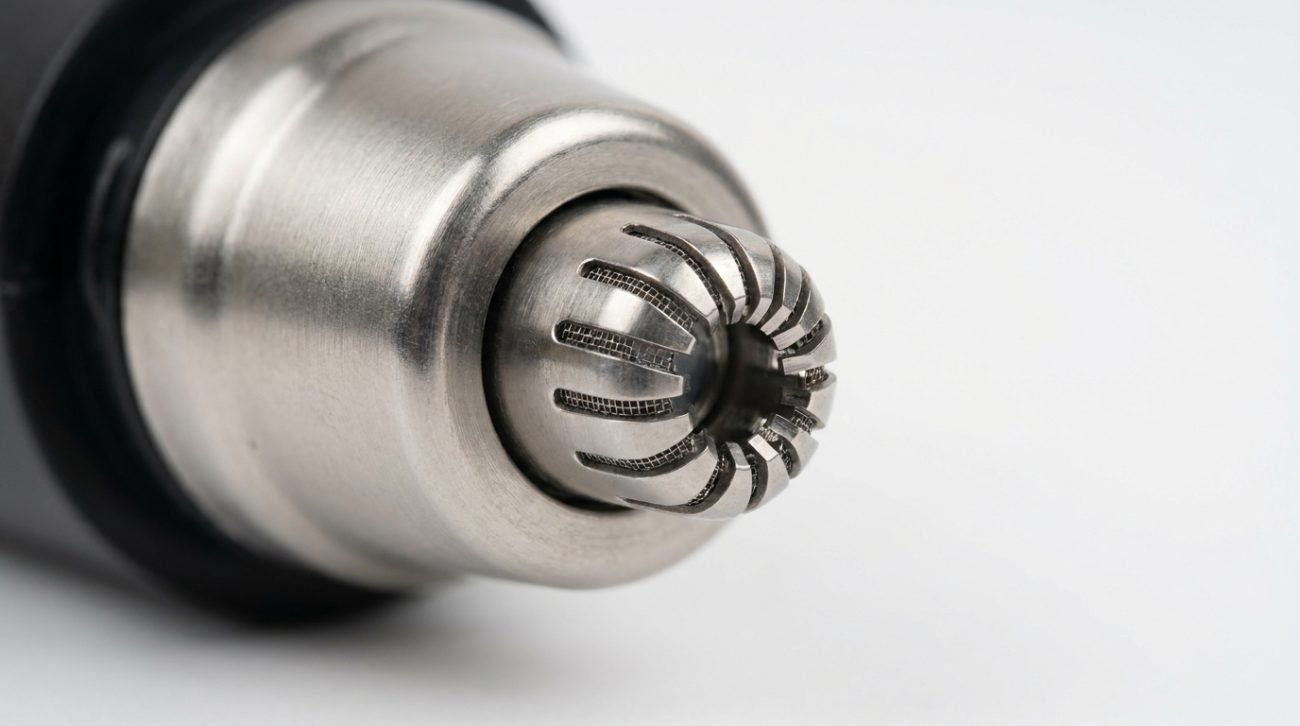
Rotary blades spin in a circular motion inside a rounded protective guard. The guard sits between the blade and the inside of your nostril. Hair passes through the guard openings, gets cut by the rotating blade, and falls away. The blade never contacts skin directly. This is the design that prevents pulling.
Foil blades use a thin perforated metal screen with a straight blade oscillating behind it — the same mechanism as most electric shavers. For flat surfaces like a jawline, this works well. For the curved interior of a nostril, the screen can catch and pull hair rather than cutting cleanly.
Based on the trimmers in the Noziq range: rotary blade construction is standard across all models for nose and ear use. The rounded head design is specifically chosen because it eliminates the geometry problem that causes foil trimmers to snag in nasal passages.
The practical test: if your current trimmer pulls or pinches, it’s almost certainly a foil or low-quality rotary design where the protective guard clearance is too tight.
For a detailed comparison of these two mechanisms, see the full breakdown in Rotary vs. Oscillating Blades: Which Is Better for Sensitive Nostrils?
Decision 2: Waterproofing — What the Ratings Mean
“Waterproof” is not a standardized term on consumer products. Any product can be labeled waterproof without meeting a specific test. The rating that corresponds to an actual engineering standard is IPX7.
IPX7 means the device has been tested to withstand submersion in 1 meter of water for 30 minutes. In practical terms, this means:
▹ Shower use is safe — not just splashproof, but sustained water exposure ▹ Full-body rinsing is possible — run the entire trimmer under the tap, not just the blade head ▹ Daily cleaning is simpler — water flushes hair clippings from the blade housing more effectively than a brush
The distinction between “IPX7 full body” and “washable head only” matters. Some trimmers rate only the detachable head as waterproof, while the body remains water-sensitive. In that case, you can rinse the blade but can’t use it in the shower without risking the main body.
See the complete guide to waterproof nose hair trimmers and IPX7 ratings if waterproofing is a priority for your use case.
Decision 3: Power Source — USB-C vs. USB vs. Battery
This decision is mostly about travel and maintenance habits.
USB-C is the current standard for smartphones, laptops, and earbuds. If you carry a USB-C cable already, a USB-C trimmer means one fewer cable in your bag. Charging speed is generally faster than older connectors. Most newer Noziq models use USB-C.
Standard USB (USB-A) is more universally compatible with older chargers, power banks, and hotel USB ports. If your travel kit is built around USB-A, this is actually more convenient than USB-C.
Battery-powered (AA) removes charging from the equation entirely. Standard batteries are available everywhere, have no self-discharge timing issue, and the trimmer is always ready. The tradeoff: you need to carry spare batteries or buy them on the road. The 3-in-1 Battery-Powered Trimmer in the Noziq range runs on AA batteries and is specifically designed for travelers who prefer not to manage charging cycles.
One spec worth noting for rechargeable models: some batteries in the range hold charge for 7+ days of daily use; others for 30+ days of standby. If the trimmer lives in a travel bag between trips, the standby time matters more than daily runtime.
Decision 4: Single Function vs. Multi-Head Kits
A single-function nose hair trimmer does one thing — trims nose hair — and does it without requiring you to select heads, manage attachments, or think about which mode you’re in. It’s the right choice if nose hair is the only thing you’re managing.
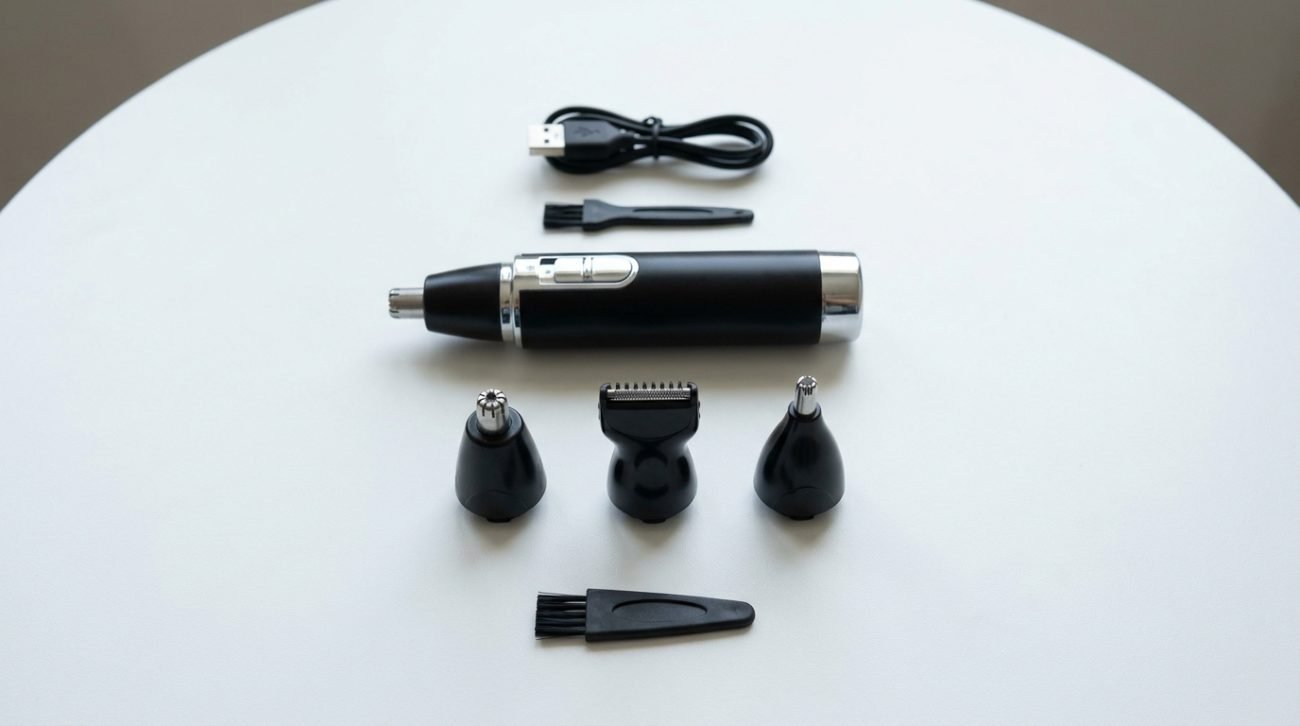
Multi-head kits add ear hair, eyebrow shaping, and sometimes facial shaving and body trimming to the same device. They make sense when you’re consolidating multiple tools or buying for someone whose full grooming routine you want to cover.
The honest tradeoff: the more functions a device handles, the more complex the head-switching and storage. A 6-in-1 grooming kit replaces six separate tools, but it also means six attachments to keep track of. Some buyers find this simpler; others find it more cumbersome than having two dedicated tools.
For nose-hair-only use: a single-head or 2-in-1 trimmer (nose + ear, or nose + eyebrow) is the cleaner choice. For a complete grooming overhaul, a multi-head kit is worth considering.
Who Should Buy What: A Plain-Language Guide
The specs above translate to different recommendations depending on who’s buying:
For most people buying their first trimmer: A single-function rotary trimmer with USB-C charging. Straightforward to use, easy to clean, nothing to figure out. Look for IPX7 if you’d like to rinse it under the tap. The Noziq NHT01 is designed around this use case — 155g, rotary blade, full-body washable.
For men who want to consolidate their grooming kit: A 3-in-1 or 4-in-1 multi-head kit covering nose, ear, eyebrow, and potentially facial shaving. Worth looking at the magnetic-head designs if you find swapping plastic-threaded heads annoying — the NHT13-006 uses a snap-attach system where heads change in one motion. See the nose hair trimmer for men guide for a full breakdown.
For women managing multiple grooming zones: The approach here is different. Women’s grooming needs often include facial hair (upper lip, chin), nose hair, and eyebrow shaping from a single compact tool that fits in a makeup bag. The pen-style and lipstick-format trimmers in the Noziq women’s range are shaped for exactly this — see the nose hair trimmer for women guide for specifics.
For older adults or buying as a gift for a parent: Three things matter most: one-button operation, a grip that doesn’t require strong hand control, and a trimmer that won’t pull or pinch. The senior-specific guide covers this in detail. This is also a practical gift — see the nose hair trimmer gift guide for options by budget and occasion.
For frequent travelers: Battery-powered models eliminate the charging dependency. Among rechargeable options, the NHT13-007 (800–1000mAh, 7+ days per charge, 150g) is the lightest kit in the range and the one most suited to long trips where charging access is intermittent.
The Specifications That Don’t Matter as Much as They Sound
A few specs that appear frequently in product descriptions deserve a more honest evaluation:
RPM (motor speed): Higher RPM sounds better. In practice, anything above 6,000 RPM is sufficient for nose hair. The 8,500 RPM motor in the NHT14-003 is genuinely useful for body hair and beard trimming, where more torque is needed. For nose hair alone, RPM is not a meaningful differentiator above a baseline threshold.
Number of attachments: More heads increase the kit’s versatility but also its complexity. Seven attachment heads aren’t useful if four of them serve functions you’ll never use. Evaluate kits by the heads you’ll actually use, not the total count.
Weight: Lighter is generally better for daily use and travel. The difference between 75g (the battery-powered BS523) and 300g (some multi-function kits) is significant in a toiletry bag. For a device you hold for 30 seconds at a time, anything under 200g is comfortable; over 250g you start to notice it.
Charging time: Less relevant than battery life. A trimmer that takes 2 hours to charge but lasts 30 days between charges is far more practical than one that charges in 45 minutes but needs weekly recharging.
Frequently Asked Questions
What’s the difference between a rotary and foil nose hair trimmer?
A rotary trimmer uses a spinning circular blade inside a rounded protective guard — the guard prevents the blade from touching the inside of your nostril, so you get a clean cut without pulling. A foil trimmer uses an oscillating blade behind a flat perforated screen, similar to a face shaver. Foil designs can catch and tug curved nasal hair rather than cutting it. For nose and ear use, rotary construction is the more comfortable design.
Do I need an IPX7 waterproof trimmer if I’m not showering with it?
Not necessarily. IPX7 certification matters most if you want to use the trimmer in the shower or rinse the entire body under running water. If you clean the blade with a brush or just rinse the removable head, a non-IPX7 trimmer is sufficient and may cost less. Where IPX7 adds value beyond shower use: the sealed construction that passes IPX7 testing also means better protection against humidity and moisture buildup over time.
How long does a nose hair trimmer blade last before it needs replacing?
Most rotary blades maintain usable sharpness for 6–12 months of daily use with proper cleaning. The main factor is whether you rinse the blade regularly — trapped hair clippings create friction that dulls the blade faster than normal use. Some Noziq models have replaceable heads; for others, the blade life effectively matches the product lifecycle. If trimming starts to pull rather than cut cleanly, that’s the signal the blade needs attention.
Not sure which trimmer fits your situation?
Browse the full Noziq range — organized by use case, not just by product name. Every model has the specs written out plainly so you can compare what actually matters.
Browse All Trimmers →About the Author
Marcus Ellis
Founder of Noziq · Spent 8 months evaluating suppliers against medical device safety standards before selling a single trimmer · His take on “best”: it’s not a star rating average — it’s the right spec combination for your specific use case. That’s what this guide is built around.
Read Marcus’s full story →Related Posts

Travel, gift giving, daily life: a guide to choosing a nose hair trimmer for different scenarios
-
Posted by
MeiGui
Travel-friendly, gift-worthy, and great for home use—learn how to pick a nose hair trimmer that fits your life and budget.

Nose hair trimmers are more than just nose hair – these uses and design details you didn’t expect
-
Posted by
Upgrade your grooming routine. Modern nose hair trimmers trim more than just nose hair—they handle eyebrows, ear hair, and more, with smart safety and travel-friendly design.
A refreshing revolution from head to toe:How to choose a nose hair trimmer that is really suitable for you ?
-
Posted by
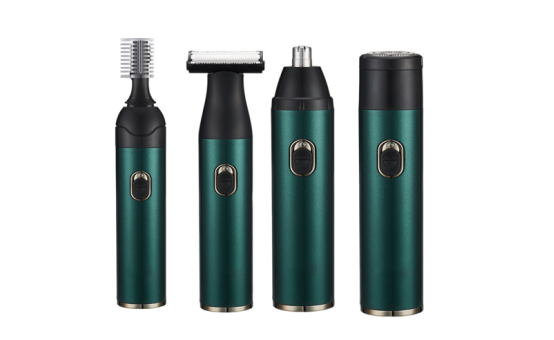
Discover the nose hair trimmer that truly fits your needs—whether for daily grooming, travel convenience, or thoughtful gifting. Find out if a basic model or a multifunctional 4-in-1 Groomer suits your lifestyle.