Best Nose Hair Trimmer for Women
Gentle, CE-Certified & Built for Facial Skin
Most nose hair trimmers are designed for men — oversized, heavy, and built for coarse nasal hair. This guide covers what actually makes a trimmer work for women: compact form factor, CE-certified blade safety, and multi-use coverage from nose to brows in one tool.
A nose hair trimmer for women is a compact electric grooming tool — typically in a lipstick or slim-pen format — using a gentle rotary blade to trim nasal, eyebrow, and upper lip hair without pulling or cutting facial skin. The best models are CE certified, weigh under 60g, include a 5mm protective guard, and fit a 2-in-1 or 4-in-1 attachment set in a body under 14cm. Price range: $11.99–$25.99.
Standard men’s nose hair trimmers average 2.5cm in diameter — the same diameter as a standard AA battery. Women’s models average 1.5–1.8cm, the diameter of a lip liner. That difference changes how the trimmer sits in the hand, which changes how much control the user has when working close to facial skin.
Beyond diameter, the key design difference is attachment coverage. Men’s trimmers are typically single-function — nose and ear only. Women’s trimmers almost always include a flat precision blade for eyebrows and upper lip, addressing the full range of facial hair that women are more likely to want to manage with a single tool.
The Four Features That Matter Most for Women
Ranked by impact on daily experience — not by what manufacturers promote.
CE (Conformité Européenne) certification confirms the blade materials, current levels, and electrical insulation have been tested against European safety standards for personal care devices. For a tool used on facial skin — which is thinner and more reactive than scalp skin — this certification is the single most important spec to verify. Without it, there is no documented standard behind the “safe for skin” claim.
A trimmer that is hard to hold precisely is a trimmer that causes nicks and over-trimming. For nose work: 1.5–1.8cm diameter, under 14cm length. For eyebrow and upper lip: a flat attachment with a precision edge of 3–5mm — not a wide foil. Weight under 60g so the hand stays steady for the 15–20 seconds of contact with facial skin.
The nostril is a curved cavity. A rotary blade spins inside a rounded guard that makes contact at all angles during a single rotation — one pass covers the full aperture. Foil blades vibrate in a straight line and are designed for flat skin surfaces. Inside a nostril, a foil blade makes partial contact at best, requiring multiple repositioning passes that increase irritation risk.
A trimmer used near the nose and mouth accumulates skin oil, hair fragments, and natural nasal moisture. Regular rinse cleaning — holding the blade head under running water for 10 seconds — prevents bacterial buildup. IPX5 covers rinse cleaning of the detachable head. IPX7 allows full device rinsing. Either is acceptable for hygiene; IPX7 is the minimum if shower use is intended.
- Use wax or adhesive near the nasal cavity. Waxing nose hair pulls follicles from inside the nasal lining — creating open wounds in a cavity lined with mucous membrane. Infection risk here is higher than almost anywhere else on the face due to the nasal area’s position in the circulatory “danger triangle.” Electric trimming cuts at the surface only.
- Use tweezers inside the nostril. Plucking creates the same follicle wound as waxing, without even the “bulk removal” justification. One pulled nasal hair leaves one open wound inside a cavity that cannot be easily kept clean or monitored. This applies to all users regardless of sex.
- Use a full-size men’s trimmer for upper lip or eyebrows. The rotary head on a standard nose trimmer is designed for insertion into a nostril — its guard geometry is wrong for flat facial skin. Using it on the upper lip or brow area removes too much hair in a single pass and can cut the skin surface. The flat precision blade attachment is the correct tool for those areas.
Rotary vs Foil — Which Is Right for Women?
The answer depends on where you’re trimming. The correct blade type differs between the nose, the eyebrow, and the upper lip.
- Circular blade spins inside a rounded guard
- Cuts at all angles in a single 360° rotation
- Guard physically prevents contact with nasal lining
- One slow rotation per nostril = complete trim
- Zero pull with a clean, sharp blade
- The correct geometry for a curved cavity
- Straight vibrating blade on a flat guard
- Designed for flat or convex skin surfaces
- 3–5mm cutting width gives line precision
- Short, controlled strokes with light pressure
- Works on eyebrow edge, upper lip, sideburns
- Should never be used inside the nasal cavity
Most women’s grooming kits include both head types. The common mistake is using the rotary nose head on the upper lip, which removes too much hair at once and can cause skin contact. The flat attachment is the right tool for any flat facial surface. If a trimmer includes only a rotary head with no flat attachment, it is a nose-only tool and should be used as one.
Best Nose Hair Trimmers for Women — Noziq Picks
Four options across price points, all CE certified. Images coming soon — full specs below.
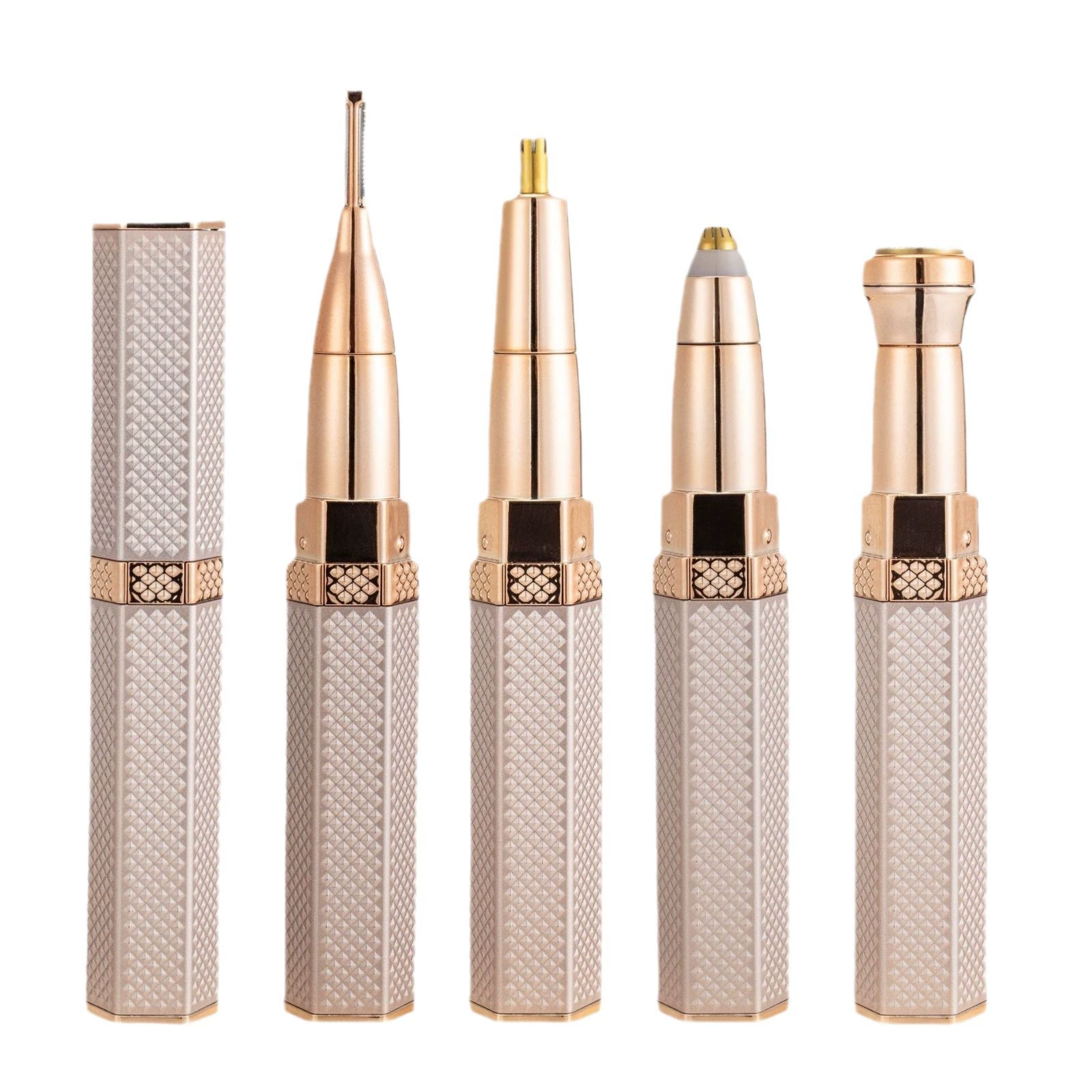
Rose Gold Facial Hair Trimmer – Lipstick Design, USB-C
Lipstick-profile body — same dimensions as a lip liner. Under 60g. Rotary blade with 5mm guard. Rechargeable via USB-C.
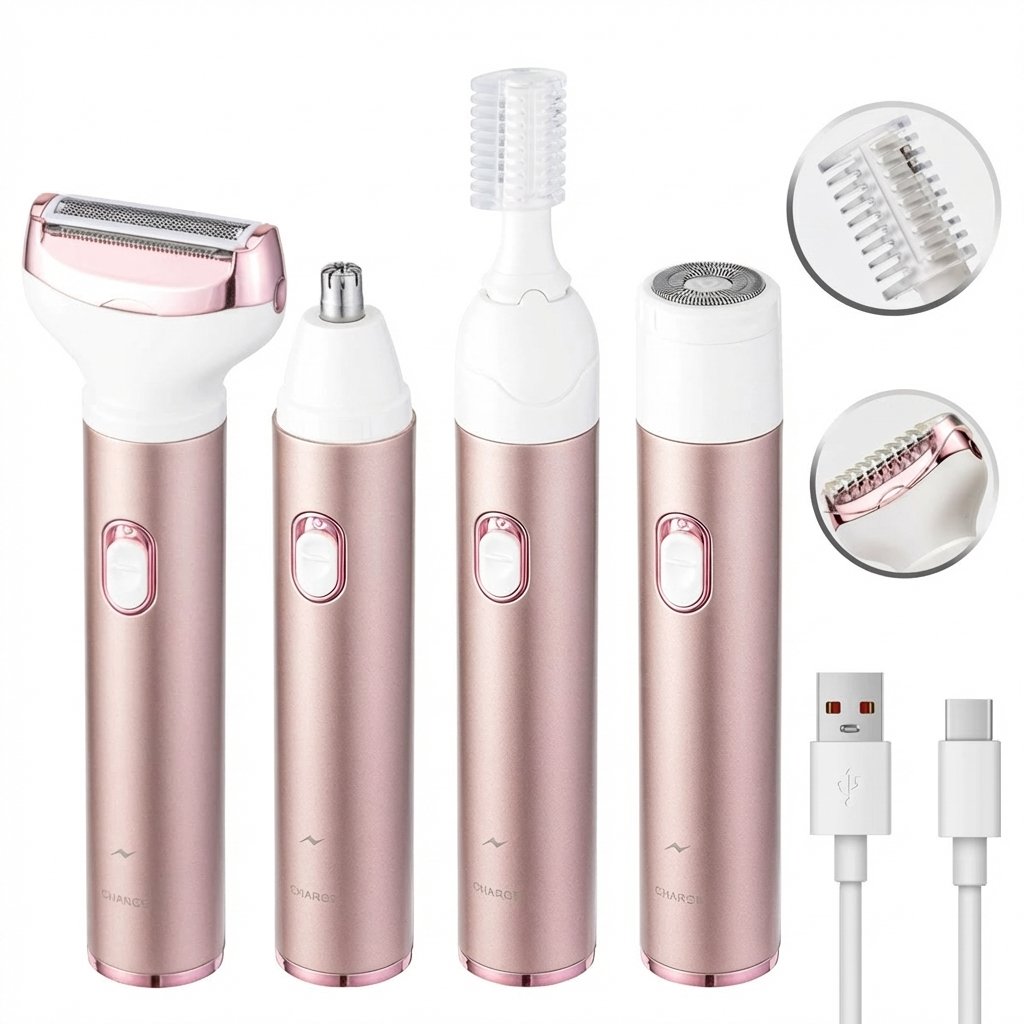
Women’s 4-in-1 Wet & Dry Hair Trimmer Set – Pink, USB-C
Four heads: nose rotary, brow precision, body trimmer, and facial. Wet & dry safe. CE certified. Pink compact body.
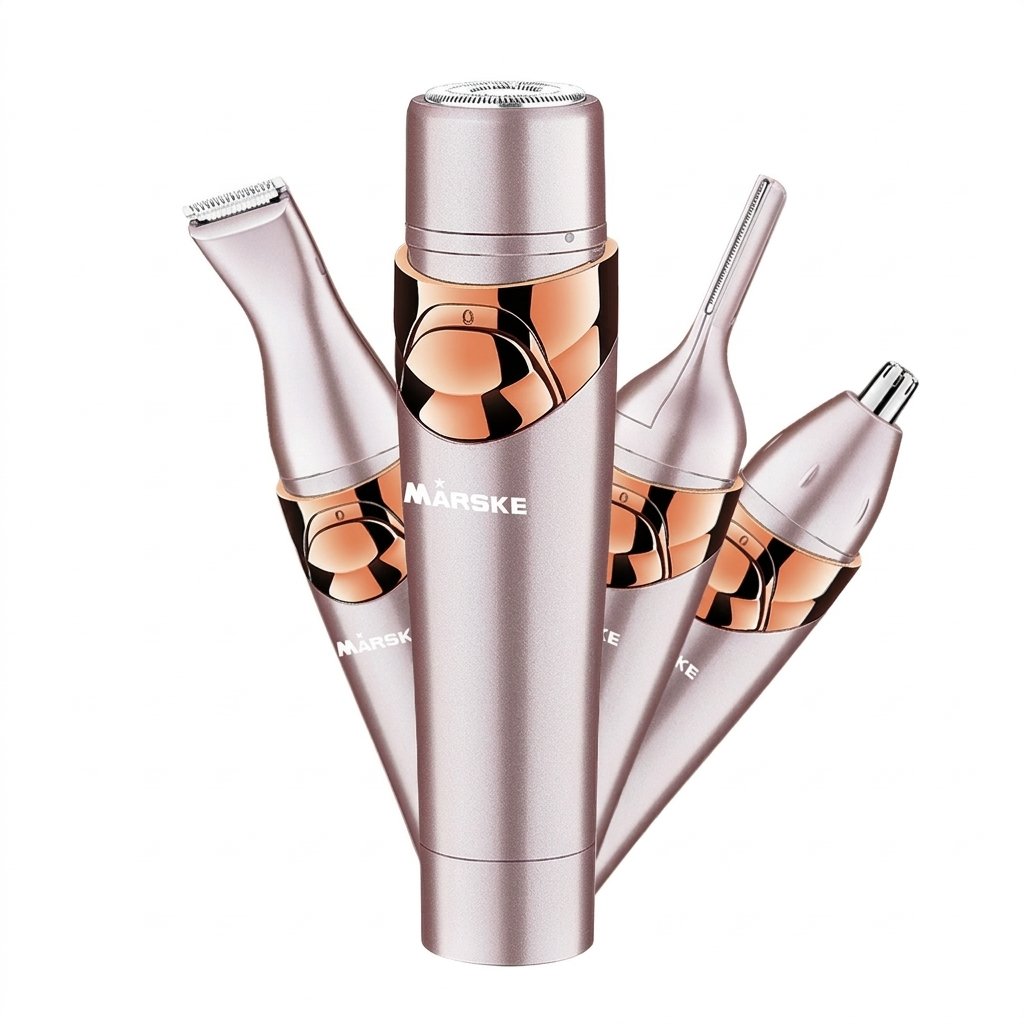
Women’s 4-in-1 Hair Removal Kit – Lavender, USB Rechargeable
Underarm, leg, nose & eyebrow in one lavender-finish kit. Gentle rotary blade, fully washable, USB rechargeable — looks at home on any vanity.
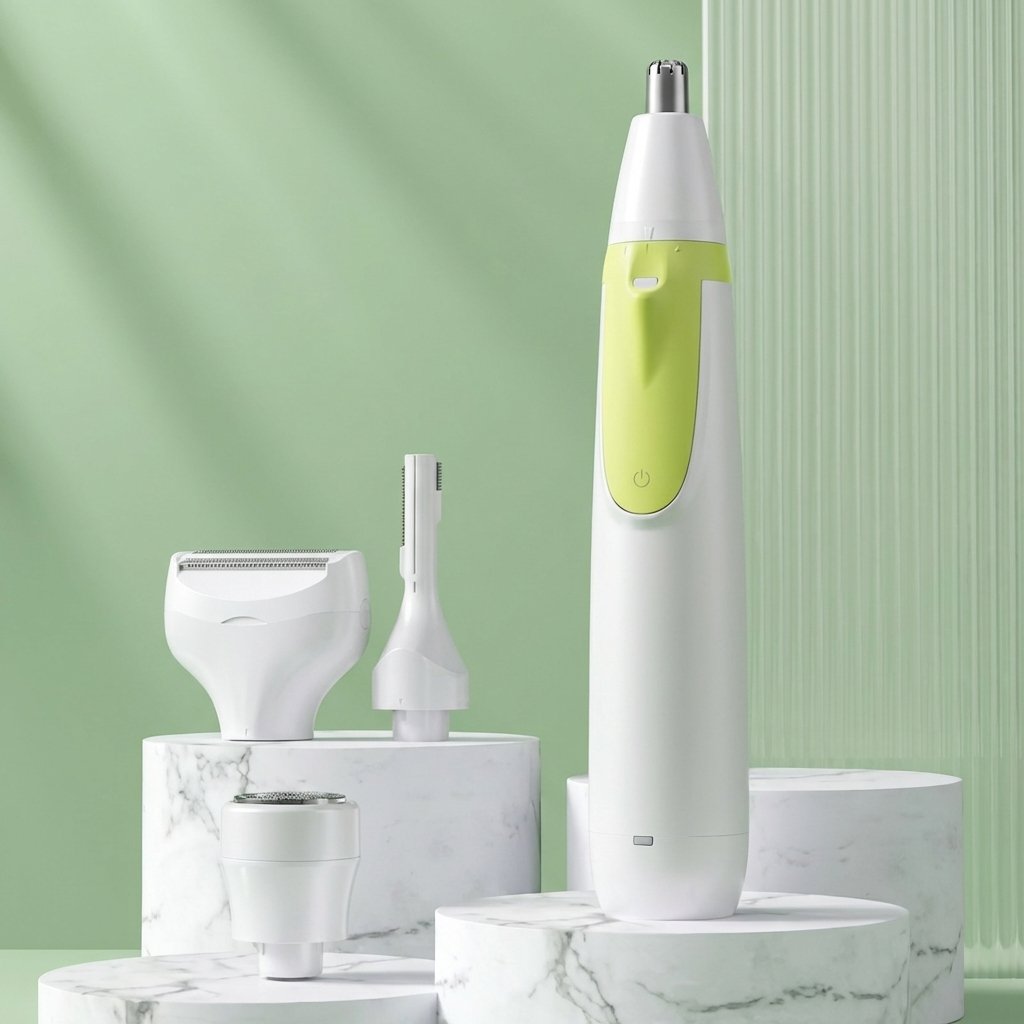
Women’s 5-in-1 Full-Body Hair Removal Kit – USB-C, Triple Certified
Five heads cover nose, eyebrows, upper lip, body, and bikini line. CE, RoHS, and FCC certified. Full-body washable design.
Women’s Trimmer Picks Compared
| Model | Price | Heads | Certification | Charging | Waterproof | Best For |
|---|---|---|---|---|---|---|
| Rose Gold Lipstick Trimmer | $11.99 | 1 (nose) | CE ✓ | USB-C | IPX5 | First trimmer / travel |
| 4-in-1 Wet & Dry Set – Pink | $15.99 | 4 | CE ✓ | USB-C | Wet/Dry | Best value multi-use kit |
| 4-in-1 Lavender Kit | $20.99 | 4 | — | USB | Full wash ✓ | Vanity-friendly · 4 zones |
| 5-in-1 Full-Body Kit | $25.99 | 5 | CE · RoHS · FCC ✓ | USB-C | Full-body wash | Complete grooming routine |
How to Use a Nose Hair Trimmer Safely — For Women
The technique for nose trimming is the same regardless of sex. What differs for women is the added steps for eyebrow and upper lip use with a precision attachment.
Stand facing a window or directly under bathroom overhead lighting. Tilt your head back slightly toward the mirror. For eyebrow work, stand close to the mirror and use natural light if possible — bathroom vanity lighting casts shadows that can make it easy to over-trim one side.
Turn the trimmer on outside the nose, then insert gently with the motor running. Inserting a stationary blade and then activating it causes a brief pull as the blade catches hair during spin-up — this is the most common cause of the “trimmer hurts” complaint. One slow 360° rotation per nostril is sufficient. Do not press against the nasal wall or insert deeper than you can see.
Swap the rotary head for the flat precision attachment before working on the eyebrow or upper lip. Use short, controlled strokes with light pressure — the flat blade cuts on contact without pressing. For brows, work with the natural arch direction. For the upper lip, use a single downward stroke on each side, not a sweeping horizontal pass.
Hold the blade head (rotary or flat) under warm running water for 10 seconds immediately after use — ideally while the motor is still running, which flushes debris out through the guard vents. Nasal and facial skin oils dry on the blade within minutes and accelerate dulling. Ten seconds of rinsing per session extends blade life from 2–3 months to 6–12 months.
A blade needing replacement feels different before it looks different — the first sign is a light dragging sensation rather than a clean cut. This typically appears at 6–12 months of regular use. Replacement heads are available separately; there is no need to replace the entire trimmer. A new blade head on a well-maintained body restores day-one performance.
More from the Noziq Grooming Blog
The question I get most from women is whether the trimmers on this site are safe for facial skin — not just the nose. The short answer is yes, provided the product carries CE certification and the user is using the correct head for each area. The lipstick-profile models and multi-head kits we carry were specifically evaluated for facial skin contact: blade material spec, guard clearance geometry, and current levels. Everything I’ve included in this guide reflects how I’d explain it to someone buying for their own daily use, not a sales pitch.
Find the right trimmer for you
All Noziq women’s trimmers are CE certified and include at least one precision flat attachment.
- Free US shipping on every order
- 3-year return & exchange policy
- Women’s models from $11.99
Nose Hair Trimmer for Women — FAQ
The best nose hair trimmer for women is compact (under 14cm), CE certified for facial skin safety, and uses a gentle rotary blade with a 5mm guard. For women who also want to trim eyebrows or upper lip hair, a 2-in-1 or 4-in-1 model covers all areas without needing a separate tool. At the $15–$25 price point, models with multiple CE-certified heads offer the best daily value.
Women can use any quality rotary nose hair trimmer — the blade mechanics are identical. What differs in women-specific models is the form factor: a smaller diameter (1.5–1.8cm versus the male standard 2.5cm), lighter weight (under 60g), and often a lipstick-style profile. Many also include attachments for eyebrows and upper lip, which standard nose hair trimmers omit. If nose-only trimming is all you need, any CE-certified rotary trimmer works.
Yes — trimming with a quality rotary trimmer is completely safe for women. The rounded blade guard prevents contact with the nasal lining. What is not safe is plucking, which creates micro-wounds inside the nasal cavity. The nasal area sits within the face’s “danger triangle,” where infections can spread more easily toward blood vessels near the brain than elsewhere on the face. Trimming, never plucking, is the correct method. See our for the complete technique.
CE (Conformité Européenne) certification means the product has been tested to European safety standards for electrical personal care devices — including leakage current limits, blade material biocompatibility, and electromagnetic compliance. For a grooming tool used on facial skin, CE certification provides verified assurance that the blade materials and electrical components have been tested against established thresholds. It is particularly important for multi-head kits where attachments contact sensitive facial skin beyond the nose.
Yes — with the correct attachment. The rotary nose head should only be used inside the nostril; the eyebrow and upper lip areas require a flat precision blade attachment because those surfaces are curved and exposed, requiring a different blade geometry. Most women’s grooming kits include both heads. Never use the rotary nose head on flat facial skin — its guard geometry will make blade contact and can cause skin irritation.
For IPX7-rated models, detach the blade head (quarter-turn counterclockwise on most models) and hold it under warm running water for 10–15 seconds with the motor still running. No brush needed. For IPX5 models, use the included cleaning brush to clear the blade housing, then rinse the head only. Never use soap inside the blade head — surfactant residue can irritate nasal and facial skin on the next use. Air dry completely before reattaching and storing.
Once a week is the right frequency for most people, regardless of sex. Growth rate varies by individual, but trimming more than twice a week is not advisable — nasal hair filters airborne particles and excessive removal reduces that function and can cause nasal dryness. For eyebrow maintenance with the flat attachment, frequency depends on personal preference and growth rate, typically every 5–10 days for edge definition.
Related Articles
- The Best Nose Hair Trimmer for Women: Your Ultimate Grooming Solution
- 5 Mistakes Women Make When Using Nose Hair Trimmers – and How to Avoid Them
- Say Goodbye to Hair Embarrassment! The Multi-Functional Women’s Nose Hair Trimmer You’ve Been Waiting For
- Why Do Ladies Use Nose Hair Trimmers? A Complete Guide from Grooming to Comfort