
Most “women’s nose hair trimmer” guides start in the wrong place. They spend the first few paragraphs explaining that women have nose hair too — as if that’s the question. It isn’t. The question is: given that you want to trim nose hair, eyebrows, upper lip hair, or some combination of these, which tool handles your specific zones without requiring you to buy three separate devices?
The answer depends on what you’re actually trimming — not on whether a trimmer is marketed in rose gold.
This guide organizes the decision by grooming zone and use case. The product recommendations follow from that, not from a gender label on the packaging.
The Zones: What You’re Actually Trimming Determines What You Need
Women’s facial and body grooming typically covers some combination of five areas. Each has a different ideal tool design:
| Zone | What Matters | Design Implication |
| Nose hair | Blade doesn’t enter nostril too far; protective guard prevents nicking | Rounded rotary head, 9mm max diameter |
| Eyebrows | Precision — trim without removing arch shape | Fine-tipped detail head or eyebrow comb attachment |
| Upper lip / peach fuzz | Flat surface, light pass; no pulling | Foil or flat rotary head, not a rounded nose head |
| Chin / facial stray hairs | Small area, precise placement | Pen-style or detail trimmer tip |
| Bikini line / body | Wider coverage, skin-safe at higher speed | Wider head, IPX7 for shower use |
The mistake most buyers make: choosing a trimmer based on the main zone and discovering it doesn’t handle the secondary zone well. A rotary nose trimmer cannot trim a flat eyebrow line cleanly. A foil facial trimmer cannot safely enter a nostril. These are different tools, or different heads on the same tool.
Single Zone vs. Multi-Zone: Which Makes More Sense
If you’re trimming nose hair only:
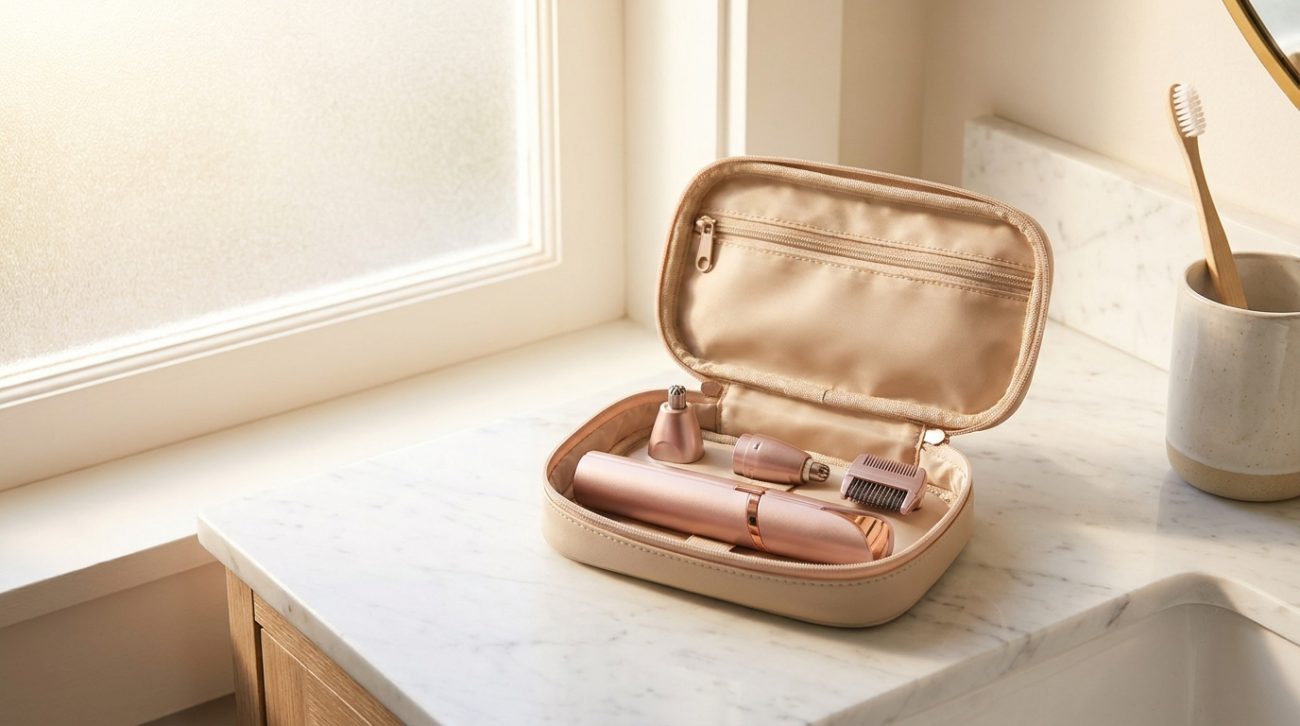
A single compact trimmer with a rounded rotary head is the cleanest solution. It does one job well, fits in any bag, and requires no head-swapping. The $11.99 Rose Gold Lipstick Trimmer is the most portable option in the Noziq women’s range — lipstick-format body, CE certified, USB-C, covers nose, eyebrow, and upper lip with three included heads. At 120g it’s the right size for a makeup bag.
The $14.99 Women’s 3-Head Compact Lipstick-Style Trimmer covers the same three zones with a travel case included — worth considering if you want everything stored together.
If you’re managing nose hair, eyebrows, and upper lip:
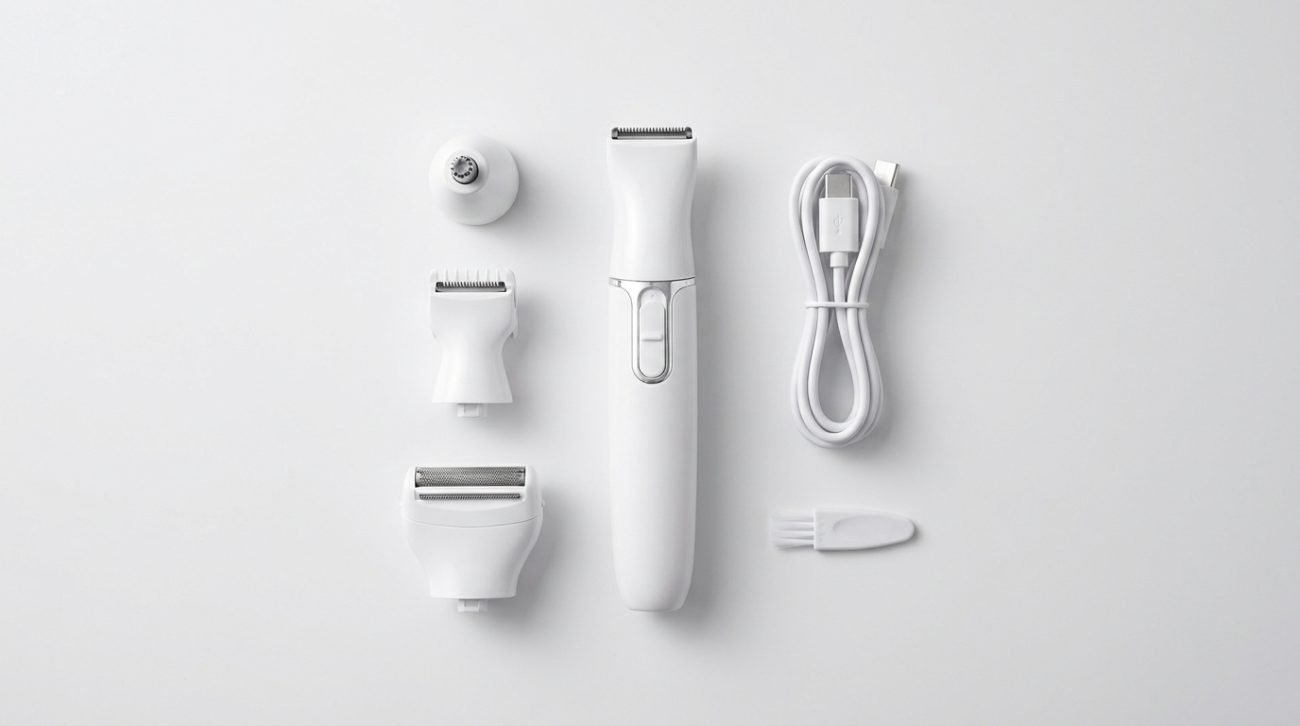
A 4-in-1 or 5-in-1 kit makes sense because you’re replacing multiple tools with one device. The $15.99 Women’s 4-in-1 Wet & Dry Trimmer Set (Pink, CE certified, USB-C) covers nose, eyebrow, facial hair, and bikini line in one device — wet/dry compatibility means it works in the shower or dry, which matters if you prefer to trim during showering.
The $18.99 Women’s Portable Facial Hair Remover (Rose Gold, 93g, CE certified, USB-C) is the lightest multi-zone option in the range at 93g. Light enough that it doesn’t feel like a grooming appliance — it fits in a purse alongside other daily items without adding noticeable weight.
If you’re managing nose, facial, and bikini/body:
This is where IPX7 waterproofing becomes relevant. The $69.99 3-in-1 IPX7 (USB-C, FCC/CE certified) covers nose, body, and bikini line and is fully submersible — use it in the shower, rinse it completely under the tap. The $25.99 Women’s 5-in-1 Full-Body Kit (USB-C, triple-certified FCC/RoHS/CE) covers the same zones at a lower price point with CE, RoHS, and FCC certification, though without full IPX7 submersion rating.
The Portability Question: Makeup Bag vs. Bathroom Shelf
This is a practical distinction that affects which form factor makes sense.
Makeup bag / travel kit:
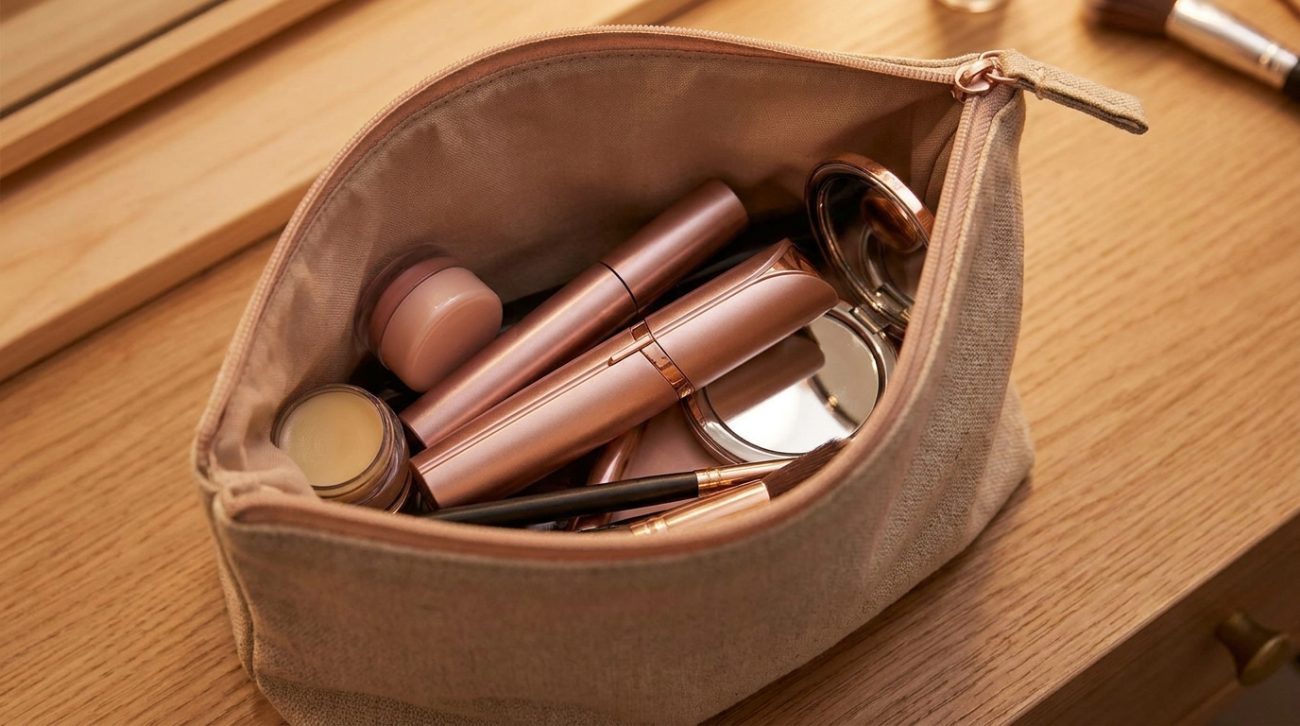
The trimmer lives in a bag and gets used wherever you are — hotel bathroom, office, on the road. The priorities here are size, weight, and whether it fits without bulk. Pen-style and lipstick-format trimmers are purpose-built for this: the $3.99 Eyebrow & Nose Trimmer Pen and the $11.99 Rose Gold Lipstick Trimmer are both small enough to sit alongside a mascara tube without taking up meaningful space.
USB-C charging matters here too — if your phone and laptop already use USB-C, one cable handles everything. Every women’s trimmer in the Noziq range uses USB-C except the $20.99 Lavender 4-in-1 (standard USB) and the $80.99 Multipurpose model.
Bathroom shelf / fixed station:
The trimmer stays in one place and gets used in the same routine every day. Size and portability matter less; coverage and ease of cleaning matter more. Full-body IPX7 waterproofing allows the entire device to be rinsed under the tap, which is significantly simpler for daily maintenance than detaching small heads and brushing them out. The $25.99 Women’s 5-in-1 Full-Body Kit handles this well, as does the $69.99 3-in-1 IPX7 for users who prioritize shower compatibility and body coverage.
What the Certifications Mean (And Why They Matter for Skin Contact)
Women’s facial grooming tools contact more sensitive skin areas than nose hair trimming alone — upper lip skin, the delicate orbital area around eyebrows, and intimate skin for body trimmers. Certification matters more here than for general grooming tools.
CE: European conformity standard covering safety and electromagnetic compatibility. Required for EU market sale; its presence on a US-sold product signals the manufacturer has met a regulated standard, not just an internal QA process.
RoHS: Restricts hazardous substances in electrical components. Relevant for a device contacting skin repeatedly — it confirms the materials don’t contain restricted heavy metals or chemicals.
FCC: US electromagnetic compatibility certification. Less directly relevant to skin safety, but its presence alongside CE and RoHS indicates the product has gone through multiple independent certifications rather than just one.
From our product selection process: women’s trimmers in the Noziq range are filtered for at minimum CE certification before inclusion. The triple-certified options (CE + RoHS + FCC) — the $15.99 5-in-1 Kit and the $25.99 Full-Body Kit — are the options where certification coverage is most complete for multi-zone skin contact use.
For the full breakdown of what to look for in a women’s trimmer, see the nose hair trimmer for women page, which filters by zone coverage and certification.
Common Mistakes That Lead to a Trimmer Sitting in a Drawer
Using a nose trimmer head on flat facial skin. A rounded rotary head designed for nostril insertion doesn’t trim a flat upper lip surface cleanly — it’s the wrong geometry. Multi-zone kits include a separate flat head for this reason. Using the wrong head for the zone produces an uneven result and often discomfort.
Buying a single-function trimmer when you need multi-zone coverage. If eyebrow shaping and upper lip trimming are both on your list, a nose-only trimmer requires you to buy separately for each. A 4-in-1 or 5-in-1 kit at the same or lower combined price covers all three — and stays organized in one place.
Choosing a trimmer based on color or aesthetics over specs. A rose gold trimmer that pulls or requires frequent charging is less useful than a matte black one that doesn’t. Color is the last variable to optimize for, not the first. That said: for a device that lives in a makeup bag, a compact, non-clinical-looking form factor is a genuine practical consideration — it just shouldn’t be the decision driver.
Skipping the certification check for intimate use. A body trimmer used near sensitive skin should have RoHS certification at minimum. The materials that contact skin repeatedly matter more than the materials in a nose trimmer used for 20 seconds.
Frequently Asked Questions
What’s the difference between a women’s nose hair trimmer and a regular one?
Functionally, the blade mechanism is the same — a rotary head with a protective guard handles nose hair the same way regardless of how the product is marketed. The differences in women’s-labeled trimmers tend to be: smaller overall body size (fits in a makeup bag), additional heads for eyebrow and facial hair that men’s trimmers often omit, color options in rose gold or pink, and marketing positioning. The specs that determine whether the trimmer works well — blade guard clearance, rotary vs. foil, IPX rating — are identical criteria for any buyer.
Can I use a nose hair trimmer on my upper lip or eyebrows?
Not with the nose trimmer head. A rounded rotary head designed to fit a nostril is the wrong geometry for a flat surface like the upper lip or eyebrow area — it won’t trim evenly and can catch skin. Multi-zone kits include a separate flat or detail head for these areas. If upper lip and eyebrow trimming are both on your list, choose a kit that includes the appropriate heads rather than trying to use a nose trimmer head for everything.
How often should a women’s facial hair trimmer be cleaned?
After every use — particularly for trimming near the upper lip and bikini line, where hair oils and skin cells accumulate faster than in the nasal area. If the trimmer is IPX7 rated, a 10-second rinse under the tap after each use is sufficient. If it’s not waterproof, detach the head, tap out hair clippings, and brush the blade grating with the included cleaning brush. A blade that’s cleaned regularly stays sharper significantly longer than one cleaned occasionally.
Looking for the right option for your zones?
The women’s page organizes trimmers by coverage zone and use case — not by color. Filter by what you’re actually trimming.
See Women’s Picks →About the Author
Marcus Ellis
Founder of Noziq · Former medical device QC engineer who knows that “gentle” is an engineering spec, not a marketing word · The women’s trimmer selection at Noziq is filtered by certification, zone coverage, and blade construction — the same criteria applied to every product in the range, regardless of color.
Read Marcus’s full story →